I am profoundly grateful to President Trump for standing courageously with Nigeria’s persecuted Christians, for naming the unspeakable “genocide” that has torn families apart and directing the Pentagon to explore targeted action against the Islamist militants of Boko Haram. As President Trump shoulders this sacred responsibility, it is my humble hope that he will also hear the anguished yet hopeful voices rising from Nigeria’s heartland.
Imagine a nation of 238 million souls, farmers tilling sun-baked fields, imams calling the faithful to prayer, pastors preaching love in crowded markets, united in a fierce, unbreakable stand against a shadowy fringe of 3,000 to 5,000 radical fighters. That’s the stark reality of Nigeria today: Out of their teeming 238 million citizens, these extremists represent less than 0.002%, a criminal speck, not the soul of their people. Yet this tiny band of killers, through Boko Haram and its splinter Islamic State West Africa Province, has sown rivers of blood, claiming thousands of lives yearly and displacing millions. Their violence scars the entire country of Nigeria, but it does not define the people. No, Mr. President, the 99.998% of Nigerians burn with righteous fury to eradicate them, not as a clash of faiths, but as a shared human imperative.
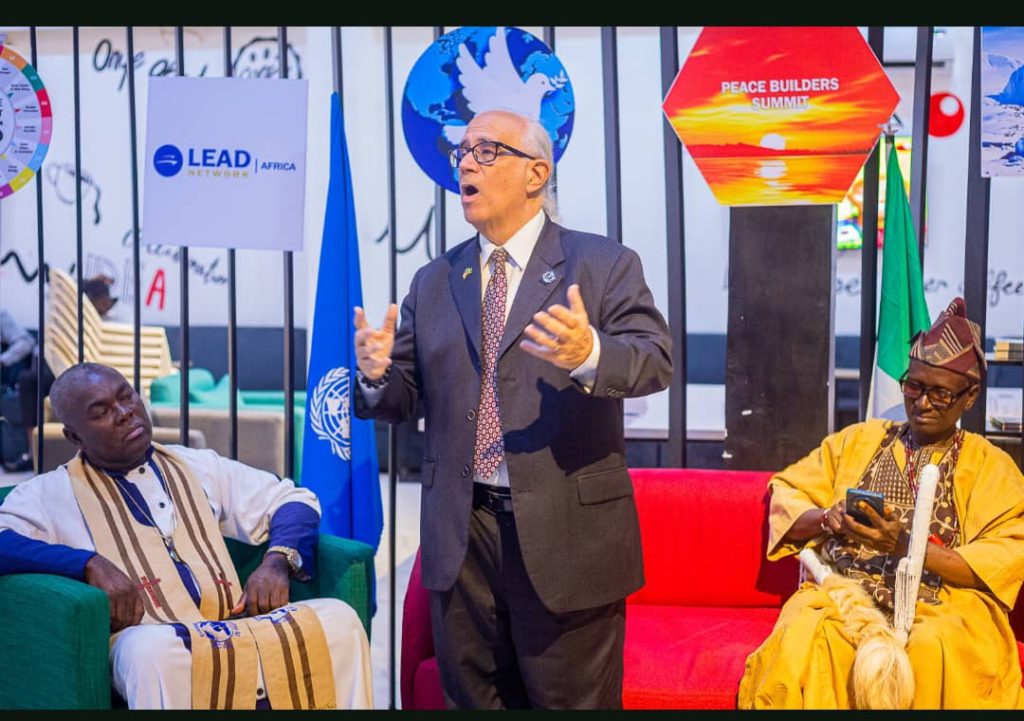
I know this fire intimately: Just months ago, in July 2025, my wife and I joined religious leaders, traditional rulers, and community advocates in Enugu for the Peace Builders Summit. There, amid Nigeria’s rich diversity, we forged a blueprint for peace that reveals the true soul of this nation, a 238-million-strong majority fervently opposed to the fringe terror that plagues its borders. This isn’t hyperbole; it’s etched in their daily defiance, from northern villages reporting insurgents to southern vigils for the fallen.
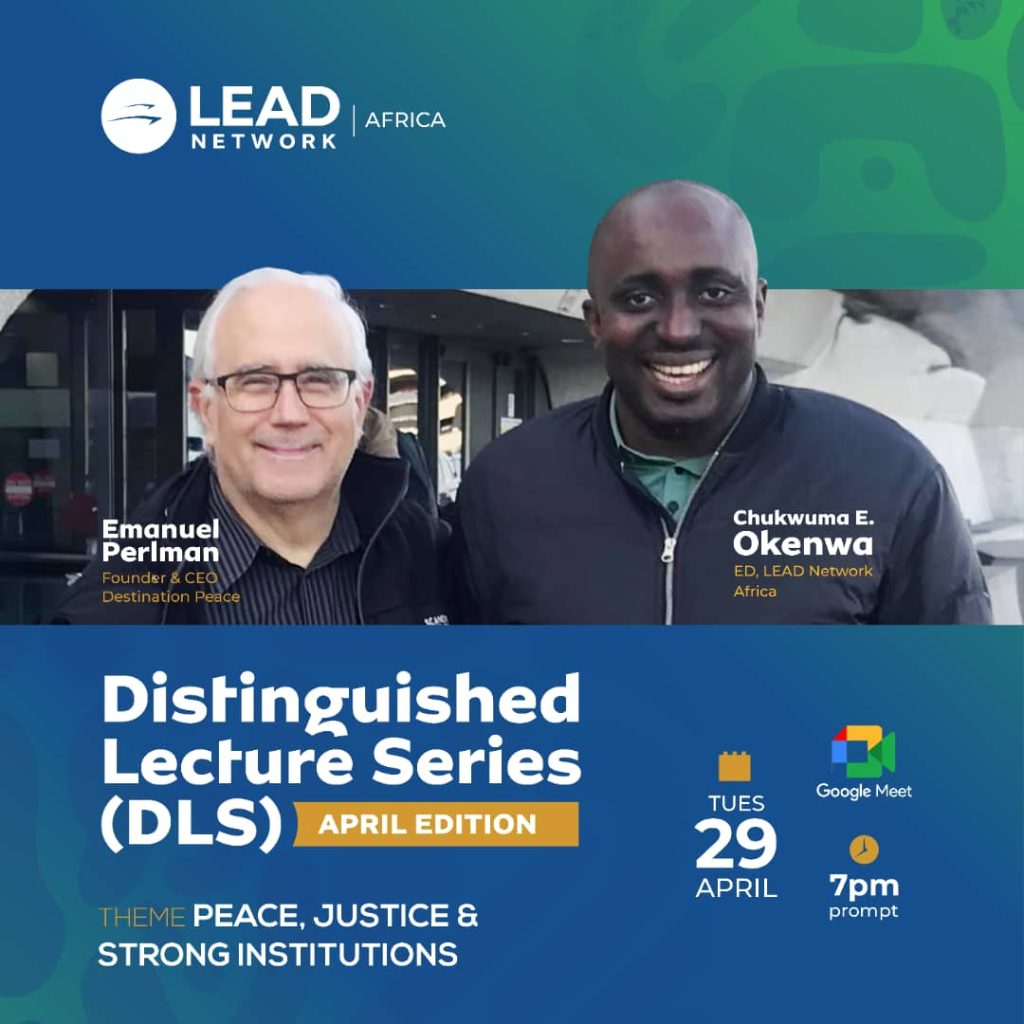
The summit, themed “Fostering Peace in a Diverse Society,” was a beacon of interfaith solidarity. Facilitated by Chukwuma Okenwa, CEO of the LEAD Africa Network in partnership with my organization, Destination Peace, it assembled imams, bishops, Buddhist monks, Mormon elders, and traditional custodians from Igbo, Yoruba, Hausa, and beyond. As a Jewish clergyman and peace advocate, I represented not just my faith but a global movement committed to dialogue over destruction. Our discussions zeroed in on the monstrous killings tearing at Nigeria’s northeast, acts of radical extremism that have claimed thousands of lives, disproportionately Christian but scarring Muslims and all who dare to coexist.
What emerged was no fragile truce, but a fierce, collective condemnation of the radicals as betrayers of humanity. In my keynote, I urged the assembled leaders to reclaim our shared Abrahamic roots, reminding the room that “everyone is more concerned about Isaac and Ishmael, rather than Abraham, who is the father of our diverse faiths.” I stressed that “religion is not the root cause of problems, but rather the followers of religion” who twist it for ego or gain. The Bible’s call to “love our neighbors and strangers” echoed in every session, mirrored by Islamic teachings on submission to God’s will through justice, not jihad.
Traditional leaders amplified this unity with unyielding clarity. His Royal Majesty Ikechukwu Asadu, Chairman of the Enugu State Traditional Rulers Council, declared: “Everyone should be esteemed as equal to the other, irrespective of tribe, belief or creed.” From the Yoruba community, the Oba, Alhaji Abdullaziz Adebayo, proclaimed his people “the most peace-loving in Nigeria,” attributing their harmony to mutual respect: “If all tribes were as peaceful as the Yorubas, there would not be a problem with peaceful coexistence.” And from the Hausa, His Royal Highness Abubakar Yusuf Sambo II, Sarkin Hausawan Enugu, laid bare the radicals’ hypocrisy: “Islam is total submission to the will of God. When Islam is followed the right way, there will not be violence anywhere.” He didn’t mince words on the perpetrators: “Anyone who commits crimes of violence in the name of Islam cannot be said to be a true Muslim; he is a criminal and should be handled as such.” Injustice, he said, breeds violence, not faith.
Even as Rev. Emmanuel Edeh, Chairman of the Christian Association of Nigeria’s Enugu chapter, acknowledged the unreciprocated hostility Christians face, “what we get in return is violence,” he called for unflinching truth-telling: “If we must have peace in Nigeria, we must learn to call a spade a spade.” Summit convener Chukwuma Okenwa challenged us all: “If every religion and tribe in Nigeria claims to love peace, then where is the disunity and violence coming from? What connects us, our humanity, is far weightier than what divides us.” Participants like Mr. Uche Gabriel echoed this: “The key to peaceful coexistence is to respectfully practice one’s religion without imposing it on others.” Professor Joy Ogbonnaya added the urgency: “We need to be intentional in building peace and solving problems despite our differences.”
This wasn’t performative piety; it was a microcosm of Nigeria’s broader reality. Polls consistently show overwhelming rejection of extremism: A Pew survey found 79% of Nigerians view groups like Boko Haram unfavorably, with similar disdain across Muslim-majority northern states. Community led deradicalization in places like Kaduna and Enugu has mobilized thousands to report insurgents, shrinking Boko Haram’s ranks by over 40% since 2020. The government’s multi-faith task forces in the northeast aren’t perfect, but they thrive because ordinary Nigerians, farmers, traders, imams, and pastors see these killers as enemies of progress, not champions of creed. Against our 238 million, their 3,000-5,000 fighters are ghosts in the machine, desperate, dwindling, and doomed without the oxygen of division.
To those now standing up for Nigeria’s Christians, President Trump, evangelical leaders and other faith based religious leaders hear this: “Your outrage is welcome, but frame it as a partnership.” Nigeria’s majority isn’t waiting for saviors; they are building peace from within. U.S. aid for intelligence sharing, economic uplift in radical prone areas, and bolstering local forces will amplify their voices, not overshadow them. Invade the narrative of division, and you risk alienating the very allies who can end this nightmare.
From Enugu’s peace summit, we issued this unequivocal decree: Radicals, whether in Nigeria or rising in my own country, do not speak for us. They are the violent criminals, the soulless ignorant, the anti-humanity few. Let Trump’s intervention empower our 238 million peace-seekers, Christian, Muslim, Jewish, traditional, and all between, to finish what we’ve started. As I said in Enugu, “We must listen to each other and work together to build a better future.” The time is now. Join us.
Emanuel C. Perlman is founder of Destination Peace and a clergyman emeritus dedicated to interfaith harmony.